


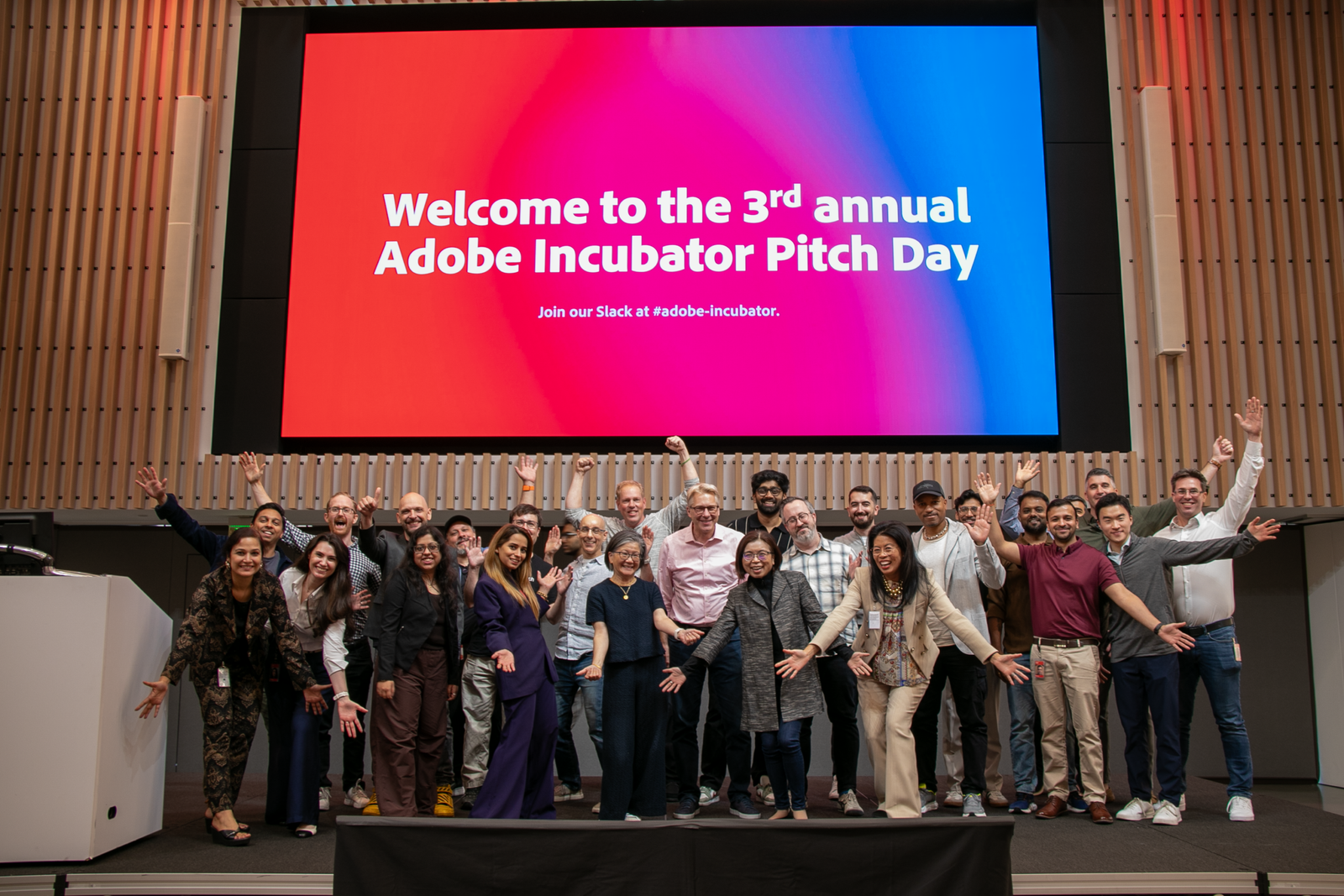
Adobe employees can apply to its Incubator program to compete for re
Nearly every part of Adobe seems to be undergoing a major wave of AI-powered updates, including the Adobe Incubator. The internal initiative is a startup-like program where employees can pitch research projects to compete for funding and res cohort, a nearly 50% increase over last year’s submissions, thanks in part to AI
This year’s crop of finalists, shared exclusively with CNET on Wednesday, highlights generative AI’s central role in shaping the future of creative software. The research projects span the spectrum of Adobe’s software, from creativity to digital marketing and data visualization.
Unlike other corporate in-house incubator programs, Adobe’s projects are like “rocket boosters,” not “moonshots,” said Malte Bernholz, head of corporate strategy and the Adobe Incubator. “We say [to] explore the edges of what might become the center, themes that are emerging, but that are not central yet,” Bernholz told me. “That gives you a lot of room to explore without much risk.”
There’s no guarantee that these projects will ever be released to Adobe customers. But some have been, such as Firefly Boards and the “Enhance speech” audio tool, which started as Adobe Incubator pitches.
Two big themes stand out among the finalists: using AI to personalize experiences and to automate tasks. These projects show how Adobe — the top name in creative software — sees the future of making things. Now, years into its AI shift, the work reveals where Adobe draws the line between machine automation and human creativity.
Inside Adobe’s in-house innovation
Incubator pitches are often employees’ attempts to solve the most frustrating problems they see every day, Bernholz said. These are a few of the seven finalists.
Project Bellflowersignificantly alters how you can edit images and videos in Adobe’s programs. This concept gives you an AI dropper that lets you select objects and people more easily for editing. For example, you can select a couch in a living room photo, choose a stock photo of pink, shaggy material, and the program will apply that material to the couch. It creates multiple variations for you to choose from. You can also use it as an expanded generative remove tool to seamlessly edit out photo bombers and the like.
Project Dahliais all about music. Earlier this month, Adobe released a slew of AI audio tools in Firefly, including a way to create custom instrumental soundtracks. Dahlia seems to be an expanded version of this, created by musicians at Adobe. You can use this program to compose a new song. It doesn’t sound like a fully AI music generator, like Suno, but it can offer more AI assistance than other Adobe tools.
Project Mistgrove aims to be a one-stop shop for small businesses, solopreneurs or small and midsize creators — people who want professional-looking content and marketing analysis without needing an entire team to run it. It’s a mobile program that lets creators link their social media accounts to receive personalized content recommendations, data insights and audience analysis.
For example, you could link your YouTube account, and the program could identify your top-performing videos and recommend future video topics and hooks based on your current audience’s interests.
Another unnamed project created a series of workflow automations that are backed by a governed repository of skills, knowledge bases and AI agents. So if you needed help with a task, you could explore the platform for pre-built AI tools already made by your fellow employees. This would be hugely helpful for employees who want to experiment with AI but don’t have the time or skills to create their own workflow.
Adobe has devoted considerable reven as many professionals remain rightly wary of the technology. But this year’s Adobe Incubator program is only another sign that the company has no plans to slow its AI research and development. Over 80% of Adobe’s patent filings are now AI-related, the company said in a blog post
Bernholz speaks like a hard-core AI believer, focused on the kinds of big picture advantages AI can offer when harnessed strategically. AI “lowers the floors and raises the ceiling” of what’s possible for creators, he said. Concerns about AI — its impact on the job market, copyright law and creativity in the era of AI slop — persist, looming large over the creative industries and people that Adobe serves. But the company, for better or worse, is plowing ahead with AI for the future.
“We want to democratize creativity, and [help] you do things that are so much more sophisticated, so much more interesting,” he said. “People will be busier than ever, translating their creativity and having great ideas. It’s just they have more time to do so and better tools available.”
