

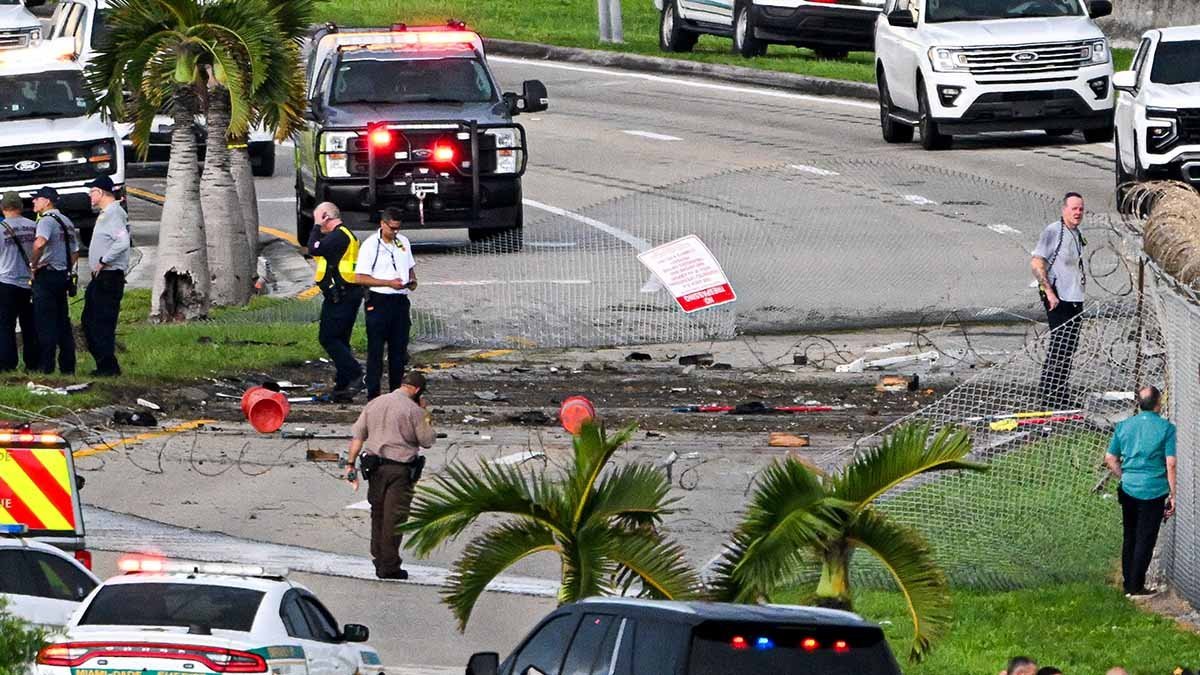

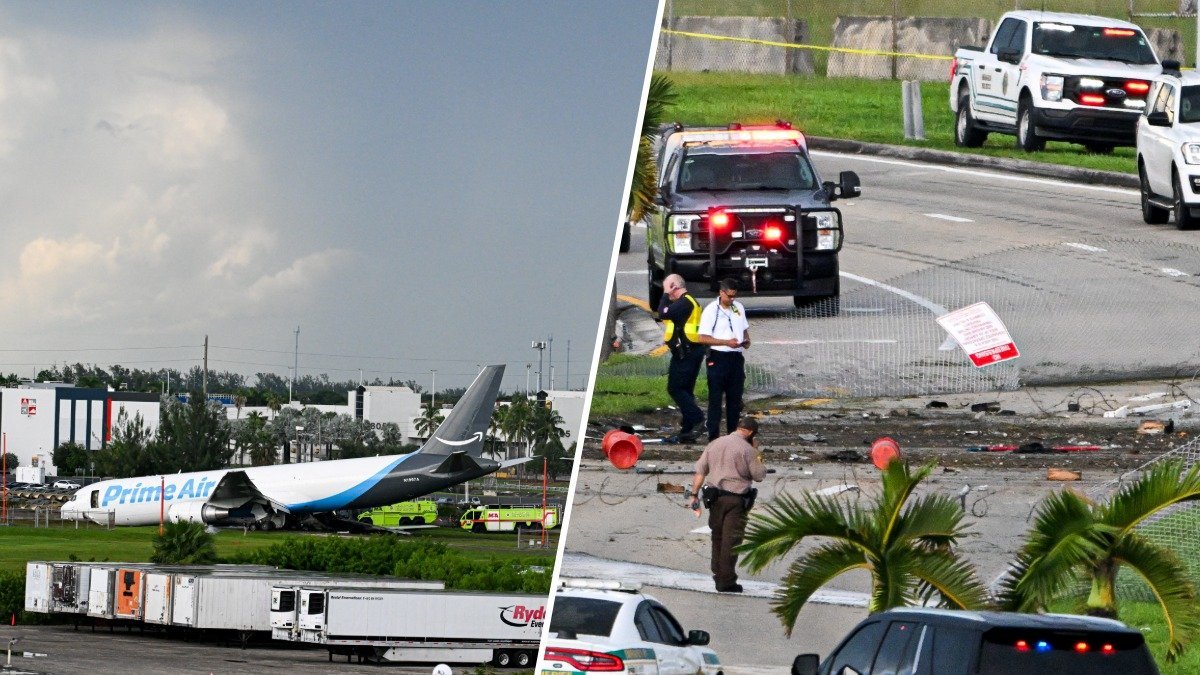
The Amazon cargo plane crash is putting new attention on the EMAS at Miami International Airport. It’s designed to stop aircraft that overrun a runway. It’s worked 26 times — six of them here in Florida. But could it have made a difference in Miami? NBC6’s Adrian Criscaut reports
A safety system that can help stop planes that veer off the runway isn’t installed at Miami International Airport.
The Engineered Material Arresting System is a runway safety area for aircraft that undershoot, overrun or veer off the runway.
Watch NBC6 free wherever you are
According to the Federal Aof a runway to help stop an aircraft. The tires of the aircraft sink into the lightweight material and the aircraft rapidly decelerates as it rolls through the EMAS bed
MIA CARGO PLANE CRASH
Investigators probe Amazon cargo jet’s fiery runway crash that killed 5 in Miami
Miami international airportSep 7
Amazon cargo plane crash leads to travel disruptions at Miami International Airport
‘A traumatizing experience’: Witness said he watched cargo plane crash at MIA
It’s unknown whether an EMAS at MIA would have helped in Sunday’s crash of an Amazon cargo plane at the airport that killed five people and left five others hurt.
Many airports were built before runway safety area standards were adopted in the 1980s and in some cases there may not be enough land or there may be obstacles that prevent their installation.
Miami’s airport appears to be in compliance and wasn’t required to have an arresting system because it has a 1,000-foot safety buffer at the end of its runways, said Mike O’Donnell, the FAA’s former director of airport safety and accident investigations.
The requirement was prompted by American Airlines Flight 1420 overrunning a runway at Little Rock National Airport in Arkansas in 1999, killing nine.
According to the FAA, a standard EMAS installation will stop most aircraft overrunning the runway at 70 knots, or approximately 80 miles per hour.
The FAA says EMAS have been installed at more than 120 airports nationwide and have been credited with helping save at least 497 lives aboard planes that overran runways.
