

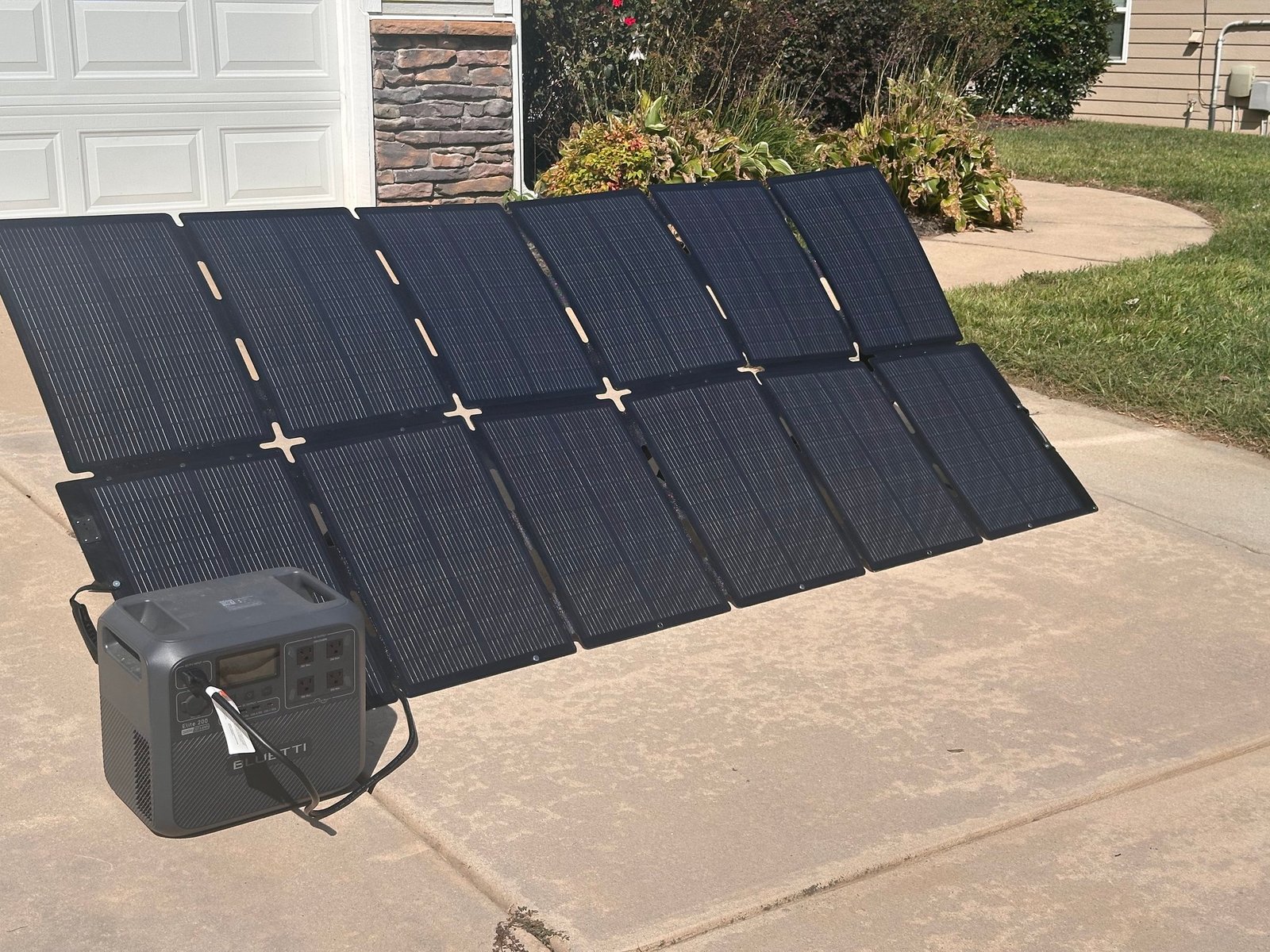
Portable solar panels are an essential sidekick to my portable power station on camping trips, helping me keep the lights on, the RV fridge running, and the water pump operating longer. But while they can add days to a dry camping trip, their small size and average efficiency often lack the muscle to charge larger portable power stations. You can solve this with larger solar panels or by daisy-chaining a few sets together, but then portability becomes an issue. Multiple sets ofsolar panels get bulky, and I don’t want a campsite that looks like a solar farm.
Bluetti’s Sora aims to change that with its new Sora 500 solar panels, which put out up to 500 watts in a surprisingly compact size. I spent several weeks testing these solar panels to see how quickly they could charge my Bluetti 2,000-watt-hour power station. With their compact size and efficient design, they quickly earned a permanent spot on my off-grid camping equipment list.
Bluetti$849.00 at bluettipower.com
Portability
If you’re taking solar panels on the road for off-grid camping, you’ll want them as compact and easy to carry as possible, and the Sora 500s are. The Sora panels weigh 28.4 pounds and fold down into a 22.4-inch by 17.5-inch square that’s just 3.3 inches thick. This makes them heavier than comparable portable solar panels, including the Jackery SolarSaga 500X and Zoupe bifacial panels, but their square shape keeps them more compact and easier to carry than bulkier panels that weigh a few pounds less. They slide easily among other camping gear in a trunk or storage.
Impressive efficiency equals ample power output
Power output matters for whether a set of solar panels can really extend a power station’s life, whether you’re off-grid RVing or trying to keep the fridge and lights on during a lengthy power outage. Portable solar panels can be tricky because they often get significantly less than their rated max wattage than bifacial glass solar panels. Many factors sap a solar panel’s efficiency, including wiring, high temperatures, angle, and cloudy skies. As a result, you typically get only 75% to 85% of a solar panel’s rated output.
During testing, I found Bluetti’s Sora solar panels performed well above average. On a clear, sunny day with temperatures in the mid-seventies, they generated 463 watts (93% efficiency) at midday. By repositioning the panels periodically for optimal sun exposure, I fully recharged my 2,000Wh portable power station on a day with scattered cloud cover. It’s impressive performance for such compact Sora panels.
Setup can be frustrating
Anyone who’s used portable solar panels knows they can be frustrating to set up, especially if you don’t have another set of hands to help. The Sora panels are no exception. The panels consist of two rows of six solar panels stacked on top of each other. They use four supports that pull out from the back of the solar panels, plus additional supports that sit on top of the top-row supports. The design works, but folding out all four legs to support the panels was frustrating. I set up the panels in a few minutes, but a second set of hands would have made it much easier.
In my experience, soft portable solar panels tend to sag in places, which can hurt performance and give the panels a sloppy, low-tech look. That’s not the case with the Sora 500 panels. Once I set them up, they sat straight with no noticeable sagging.
Connecting to the Bluetti AC200 I used to test the solar panels was easy, in part because both were from the same brand.I also connected them to an Anker Solix C2000 Gen 2 portable power station I was testing, though I needed an adapter cable.
While setting up the Sora panels was a little tedious, taking them down was easy. The legs fold flat and snap securely to the panels. Once flat, the panels fold easily in an accordion style. I didn’t have to fold and refold to get it right. Once assembled, snap straps hold the panels together. I had the whole set folded up and on the move in under a minute on the first try.
Who is it for?
Bluetti’s solar panels have many applications. They break down to a small size yet still produce a lot of power, making them a great option not only for keeping an RV powered while dry camping but also for emergency backup power if you live off the grid or in a place where outages are frequent and long. Pulling the panels out of the garage, setting them up, and connecting them to a power station takes minutes. Once up and running, they pull enough power to keep a 2,000 to 3,000Wh power station going for days, depending on the weather. Like most soft portable solar panels, the Sora 500s are made from rugged material. You can wedge them into other gear in the back of a truck or in a garage without worrying about damaging them.
It’s a heavy panel with a fussy setup, but for RVers and off-grid campers who need to recharge a large power station, the Sora 500’s compact fold and strong output make the tradeoff worthwhile.
More ShoppingWhat size power station do you need? Here’s how to figure it out
Learn how to calculate the power output and battery capacity you need for a power station, whether you’re camping, working remotely or preparing for an outage.
The best portable generators for camping and blackouts
We tested the best portable power stations for camping, RVs and home backup from Bluetti, EcoFlow, Anker, Goal Zero and Jackery to find the models worth buying.
Goal Zero just announced a new durable, powerful, solar generator
Goal Zero announced its 6th-generation Yeti 1500 solar-compatible electric generator. It has an IPX4 rating, delivers up to 3,600W, and runs gear for hours.
The best portable solar panels to keep your power station charged
From RV trips to emergency backups, these are the best solar panels to deliver the right mix of efficiency, ease of use and rugged design.
The best portable generators to stay juiced up on-the-go
The best portable generators will keep you on the grid during emergency situations regardless of how much space you have, or how often you go on roadtrips.
Here’s how we choose products to recommend to you. Prices are accurate at the time of publication and subject to change.
